
Government Declares Fraud Illegal After Decades Of Hands-On Research
WASHINGTON, D.C.
By Thurston P. Bootstrap IV, Staff Propagandist
After years of immersive field study, federal officials announced Tuesday that fraud is, in fact, bad, unveiling a bold new initiative to prohibit the very activity they have quietly tolerated, outsourced, subsidized, and accidentally rewarded for generations.
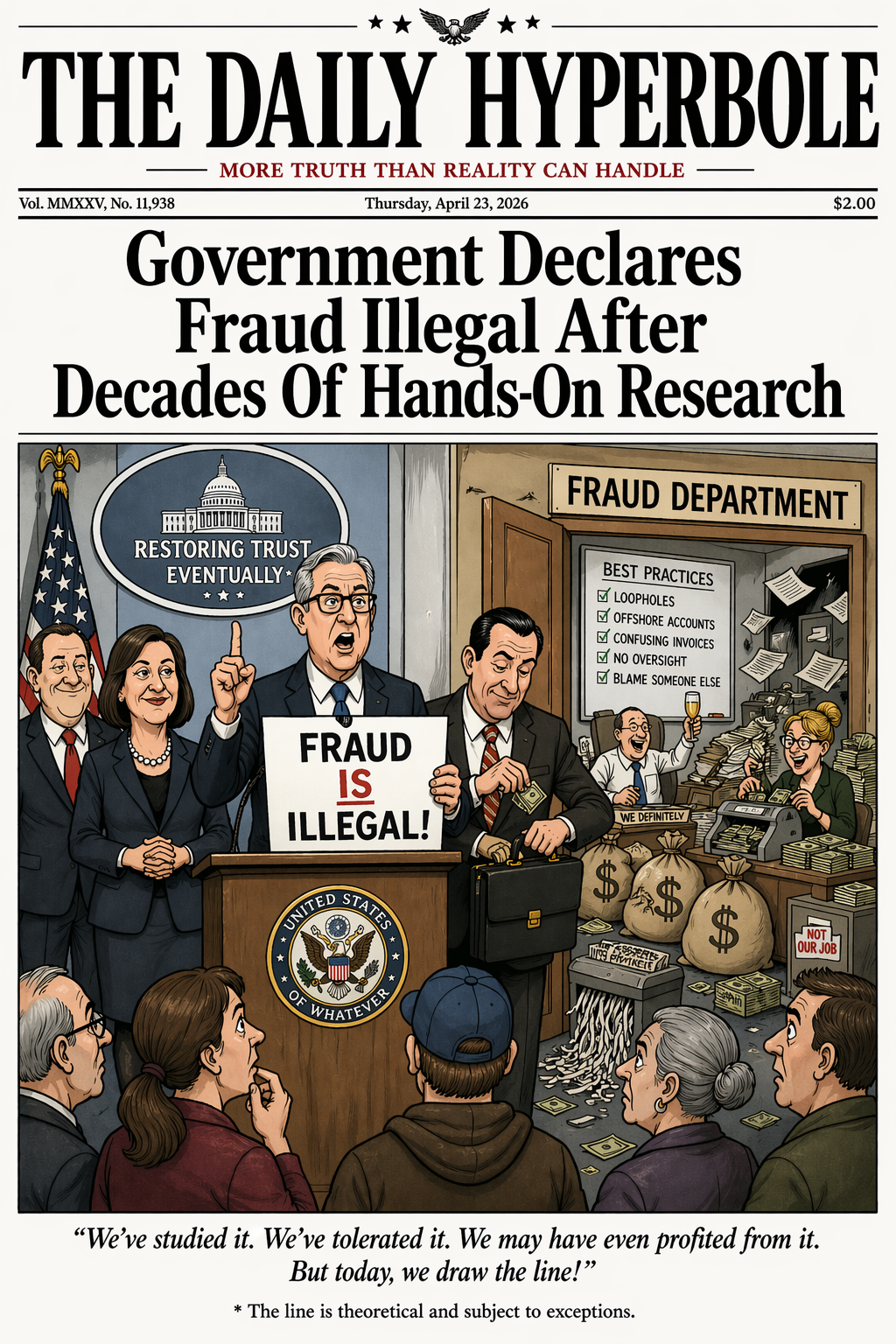
In a nationally televised press conference held beneath a banner reading RESTORING TRUST, EVENTUALLY, lawmakers and agency officials proudly declared that fraud would no longer be considered “part of the cost of doing business,” “an unfortunate clerical misunderstanding,” or “a highly innovative revenue model.”
“For too long, fraudsters have exploited loopholes, weak oversight, and our own total lack of curiosity,” said one senior official, standing in front of a PowerPoint titled Lessons Learned, Somehow. “That ends today. We are drawing a line in the sand, after first paying a consulting firm $14 million to locate the sand.”
The new crackdown follows decades of government exposure to fraudulent behavior in nearly every imaginable form, including defense contracting, financial reporting, campaign fundraising, pandemic relief, cryptocurrency ventures, nonprofit administration, municipal bidding, corporate accounting, and whatever exactly it is that private equity does.
Officials say that this extensive firsthand experience uniquely qualifies them to recognize fraud when they see it, provided it is not too complex, too large, too politically inconvenient, or currently making a meaningful campaign contribution.
“Fraud has become deeply embedded in the system,” said another spokesperson. “That’s precisely why we feel ready to condemn it now, in the abstract.”
The initiative, formally titled the National Integrity and Anti-Fraud Modernization Accountability Task Force, or NIAMATF, includes a sweeping set of reforms designed to appear aggressive while remaining administratively survivable. These include the creation of a new oversight board, a public awareness campaign, three interagency working groups, and a secure online portal through which citizens can report fraud directly into what experts describe as “a very respectable-looking void.”
Critics, however, questioned whether the government is truly equipped to combat fraud, given its long and distinguished history of partnering with it, overlooking it, and occasionally electing it.
“At a certain point, you have to ask whether this is enforcement or just brand management,” said one policy analyst. “The state has spent decades studying fraud from the inside. Frankly, nobody knows more about it.”
Average Americans greeted the news with cautious optimism, noting that while it was refreshing to hear fraud denounced so forcefully, they would wait to see whether anything actually changed before celebrating.
“I guess it’s nice they finally noticed,” said Maryland resident Dana Mercer, who has spent the past eight years disputing medical bills, student loan errors, banking fees, identity theft notices, and a parking ticket issued to a vehicle she has never owned. “It does feel a little weird hearing this from people who keep acting surprised every time billions of dollars disappear into a folder labeled ‘miscellaneous.’”
At press time, officials confirmed they were launching an immediate investigation into how fraud had been allowed to flourish for so long, with early findings expected to implicate everyone except the people conducting the investigation.