
Nation Divided Over Whether Seashells Can Commit Felonies
Legal experts urge calm as Americans struggle to determine criminal intent of beach décor
By Thurston P. Tidalwave, Senior Coastal Crime Correspondent
WASHINGTON, D.C. — The United States found itself sharply divided this week after a set of seashells arranged on a beach became the center of a heated national debate over whether inanimate coastal objects are capable of committing federal crimes.
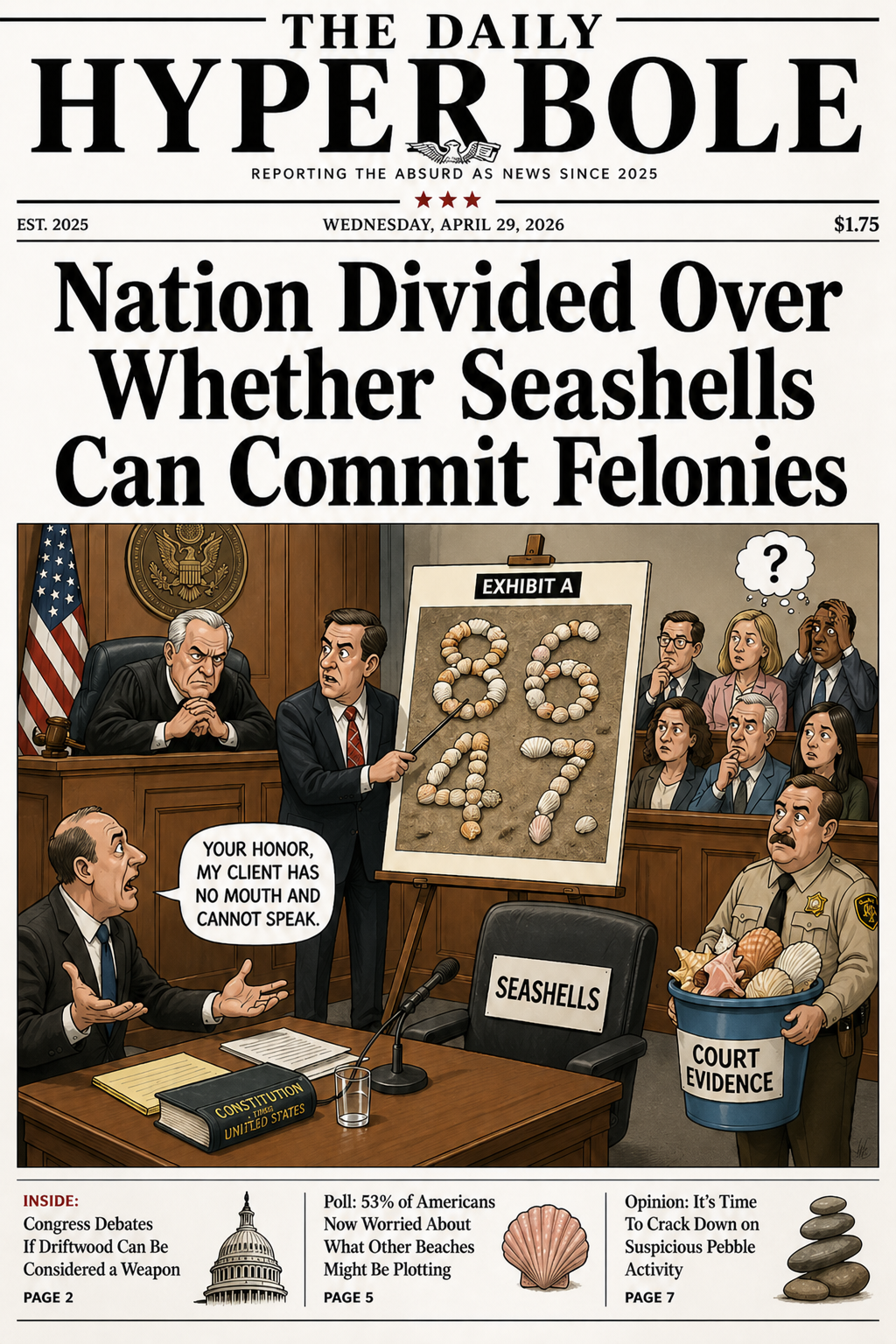
The controversy began after former FBI Director James Comey posted an image of seashells arranged to form the numbers “86 47,” a sequence that authorities allege may constitute a coded threat against President Donald Trump. The post was later deleted, but not before igniting a firestorm of legal analysis, political outrage, and several thousand Americans Googling “what does 86 mean.”
“This is a deeply concerning development,” said one Justice Department official, speaking on condition of anonymity. “We are now forced to confront the very real possibility that seashells, when arranged improperly, may pose a threat to national security.”
Legal scholars across the country quickly weighed in, offering a wide range of interpretations. Some argued that the shells themselves were clearly harmless, while others suggested that, under certain circumstances, “beach-based numerical messaging” could fall into a legal gray area.
“It really comes down to intent,” explained one constitutional law professor. “Did the seashells intend to threaten the president? And if so, can we prove that beyond a reasonable doubt?”
The question has proven difficult to answer, with experts noting that seashells have historically remained silent during legal proceedings.
Meanwhile, Americans on both sides of the political spectrum have taken firm positions. Supporters of the indictment argue that any perceived threat—whether delivered verbally, digitally, or via marine life—must be taken seriously.
“If we start ignoring this kind of thing, where does it end?” asked one concerned citizen. “First it’s seashells, then it’s driftwood, and before you know it, someone’s spelling out threats with pebbles.”
Critics, however, have called the case an overreach, warning that it could set a dangerous precedent for artistic expression and beach activity nationwide.
“I was at the shore just last weekend,” said another American. “I built a sandcastle. Am I next?”
The debate has already had real-world consequences. Several coastal towns reported a sharp decline in recreational shell arrangement, while others have begun posting signage reminding visitors to “keep all decorative formations non-threatening in nature.”
At press time, federal authorities confirmed they were monitoring additional beaches for suspicious layouts, though officials clarified that “most shells appear to be cooperating.”