
Europeans Furious After America Finally Learns Soccer And Immediately Starts Rigging It
Written by Thurston P. Bootstrap IV
NEW YORK, NY — In what European officials are calling “a dark day for the beautiful game” and American officials are calling “finally understanding the sport,” the United States has reportedly mastered soccer just in time to begin influencing the rules, the referees, and the disciplinary process.
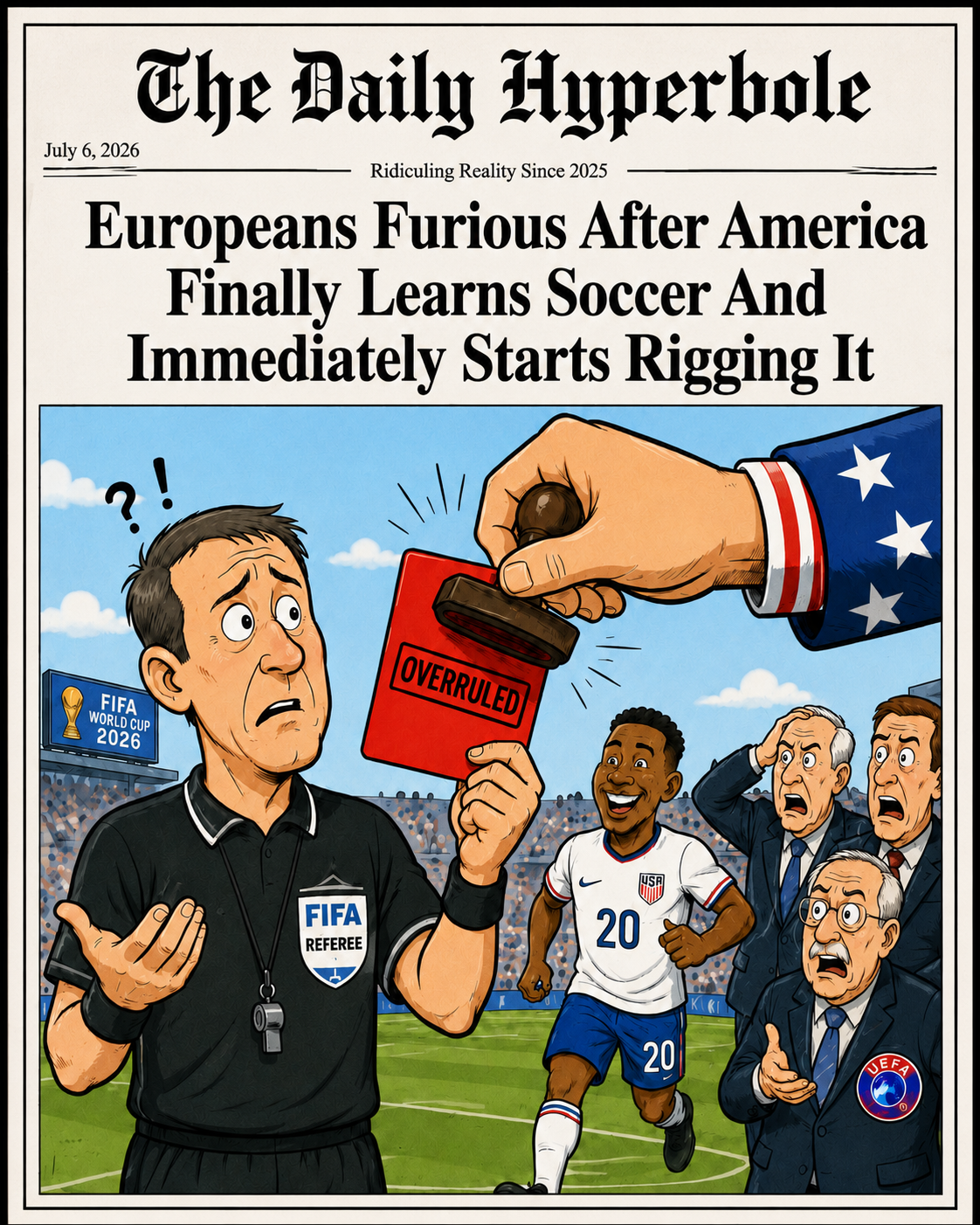
The controversy erupted after U.S. striker Folarin Balogun, who had received a red card in America’s previous World Cup match, was cleared to play against Belgium following an urgent review by FIFA, several phone calls, and what one White House aide described as “the normal American process of asking to speak to the manager.”
“This is outrageous,” said Belgian football official Hendrik Van der Velde, clutching a folder labeled Integrity Of The Game, Unless We Are Winning. “For decades, Europe has carefully preserved soccer’s proud traditions of corruption, favoritism, opaque disciplinary rulings, and suspicious tournament decisions. Then America shows up, learns the offside rule last Tuesday, and immediately starts doing it louder.”
UEFA released a strongly worded statement condemning the decision, calling it “unprecedented, incomprehensible, unjustifiable, and frankly very American.”
“This is not how soccer is supposed to work,” the statement read. “Soccer corruption must be subtle, slow-moving, bureaucratic, multilingual, and ideally hidden inside a committee based in Switzerland. It cannot simply be handled through one direct phone call from the President of the United States. That is vulgar.”
American fans, meanwhile, appeared thrilled to discover that soccer, like every other global institution, contains a complaints department.
“I always thought soccer was boring because there weren’t enough points,” said Ohio resident Brett Callahan, wearing a newly purchased U.S. jersey over a football jersey. “But now that I know we can call someone after the game and maybe change what happened, I’m hooked. This is basically the NFL, but with more countries pretending they’re above it.”
According to sources, U.S. officials became concerned after learning that a red card normally carries an automatic one-match suspension, a rule Americans immediately identified as “a regulation” and therefore “probably negotiable.”
“Once we found out there was paperwork involved, we knew we had a chance,” said one unnamed U.S. Soccer official. “America may not have invented soccer, but we did perfect the appeal process.”
FIFA defended its decision, explaining that Balogun’s suspension had not technically been erased, but merely placed on probation for one year, a distinction experts say makes perfect sense if you stop listening halfway through the sentence.
“The red card still exists,” said FIFA spokesman Luca Meier. “It is simply no longer performing any of the functions normally associated with a red card. This is completely consistent with the spirit of our disciplinary framework, which exists mainly to be interpreted under pressure.”
When asked whether political influence played any role in the decision, FIFA officials strongly denied the accusation before adding that it was “wonderful to hear from such a passionate fan of the game, who also happens to control visas, federal security coordination, stadium logistics, and the airspace above several tournament venues.”
European fans reacted with disbelief, accusing the United States of undermining a sport they said should only be undermined by people who have been doing it for generations.
“You cannot just arrive and rig soccer,” said French supporter Antoine Girard. “There is culture here. History. Tradition. Our grandfathers bribed officials with dignity.”
Italian commentators agreed, arguing that America’s approach lacked artistry.
“In Europe, these things are done delicately,” said one Rome-based sports columnist. “A dinner. A handshake. A misunderstood envelope. Perhaps a referee assignment that makes everyone raise one eyebrow. But America? One call. Boom. Striker eligible. No romance.”
British pundits were particularly alarmed, warning that the United States may now attempt to introduce other American concepts into soccer, including commercial breaks, congressional hearings, and a playoff system where the Dallas Cowboys are somehow invited.
“This is what we feared when they started calling it soccer without shame,” said former England midfielder Nigel Wetherspoon. “First they mispronounce ‘Premier League.’ Then they discover VAR. Then the President personally intervenes in a red-card appeal. It’s a slippery slope.”
The White House rejected criticism, insisting the President had done nothing improper and was merely advocating for fairness, sportsmanship, and America having all of its best players available in a knockout match.
“The President believes deeply in fair competition,” said a spokesperson. “And by fair competition, he means competition in which America is not disadvantaged by foreign referees, international rules, or consequences.”
Asked whether the administration planned to intervene in future World Cup decisions, the spokesperson said the White House would review each incident on a case-by-case basis, especially penalties, offsides, yellow cards, corner kicks, and any goal scored against the United States “under suspicious circumstances, such as entering the net.”
Belgium has reportedly explored additional legal options, though experts say its chances are slim now that America has discovered the most powerful formation in modern soccer: four defenders, three midfielders, three forwards, and one executive branch.
At press time, FIFA officials confirmed they were reviewing a new U.S. proposal stating that any match tied after 90 minutes should be decided by “electoral college goals.”