
Economists Warn War May Be Bad For Prices, Consumers, Supply Chains, And Everyone Involved
By Thurston P. Bootstrap IV
Senior Market Panic Correspondent
WASHINGTON, D.C.
WASHINGTON, D.C. — In a stunning breakthrough that experts are calling “obvious in hindsight and also obvious beforehand,” leading economists warned Thursday that war may be bad for prices, consumers, supply chains, fuel costs, grocery bills, household budgets, global stability, and nearly everyone directly or indirectly involved.
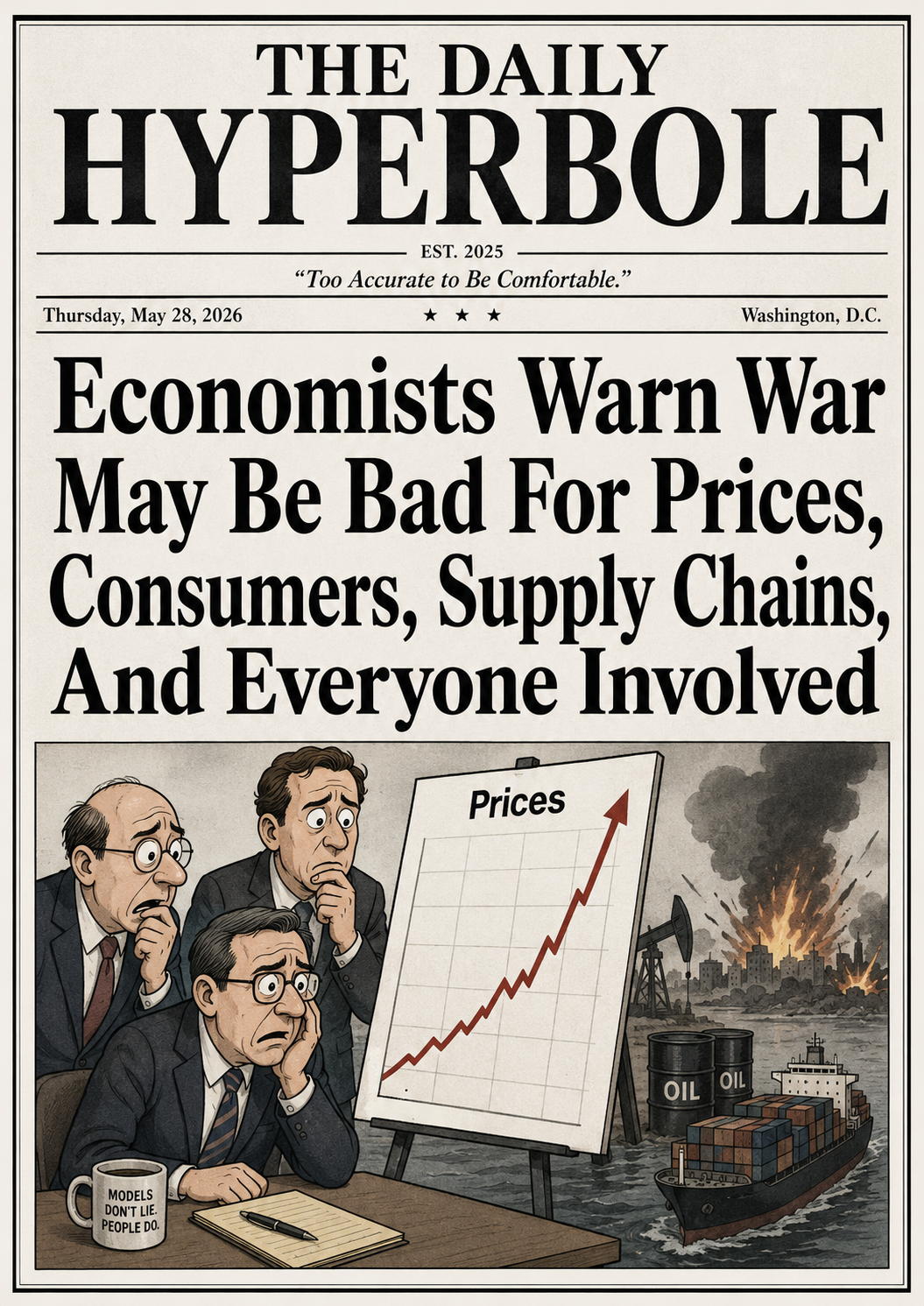
The report, compiled by several prestigious institutions with names too long for ordinary citizens to understand, found a “strong correlation” between missiles being launched and things getting more expensive.
“After reviewing the data, we are beginning to suspect that bombing infrastructure, disrupting shipping routes, threatening oil supplies, and generally making everyone panic may not create ideal conditions for price stability,” said Dr. Harold Keystroke, senior economist at the Center for Things Getting Worse. “We are not ready to say war is inflationary in every case, but we are comfortable saying it appears to be less affordable than peace.”
The findings come as consumers across the country continue to experience what analysts describe as “the checkout line phase of foreign policy,” in which distant geopolitical events gradually reappear as higher gas prices, smaller grocery bags, delayed shipments, and a vague sense that every item in the store now costs $9 more for national security reasons.
According to the report, war can have several negative economic consequences, including oil shocks, shipping delays, energy instability, food price increases, market volatility, labor disruptions, damaged infrastructure, emergency spending, and the sudden realization that global civilization is held together by approximately six boats, three pipelines, and vibes.
“This is exactly why we need economists,” said one Treasury official. “Without them, the public might recklessly assume on its own that global instability is bad.”
The study also warned that war may place additional pressure on central banks, which must now determine whether to fight inflation through interest rates, public statements, or simply waiting for everyone to stop blowing up the parts of the world where important commodities come from.
Federal Reserve officials reportedly remain divided on the issue. Some believe inflation can be contained through careful monetary policy, while others believe the situation may improve if fewer strategic assets are on fire.
“We have many tools at our disposal,” said one Fed spokesperson. “Unfortunately, none of them are capable of convincing hostile nations to calm down for a second so Americans can afford cereal.”
Markets responded positively to the report after investors concluded that economists had not yet used the word “recession” enough times to ruin the afternoon. The Dow briefly surged on hopes that war may eventually become cheaper if it ends, before falling again after analysts remembered that it had not ended.
Meanwhile, ordinary Americans expressed relief that experts were finally acknowledging the connection between international conflict and the mysterious disappearance of disposable income.
“I was wondering why my grocery bill felt like a hostage negotiation,” said local consumer Melissa Danforth, holding a receipt long enough to qualify as a classified briefing. “It’s comforting to know there’s a complex explanation involving oil futures, shipping lanes, and people in suits making very serious faces.”
Business leaders have urged the public to remain patient as supply chains continue experiencing history.
“We understand consumers are frustrated,” said a logistics executive whose company recently added a 14% “global uncertainty convenience fee” to all deliveries. “But people need to remember that when the world becomes less stable, it costs more money to move plastic objects from one nervous country to another.”
At press time, economists were preparing a follow-up report investigating whether peace, diplomacy, functioning ports, stable energy markets, and not bombing things could potentially benefit the economy.