
Senate Bans Lawmakers From Betting on Wars They May Know About in Advance
WASHINGTON, D.C. — In a bold move to restore public trust, the United States Senate has voted to ban lawmakers and staff from placing bets on prediction markets involving wars, elections, economic crashes, and other events they may have accidentally learned about during classified briefings.
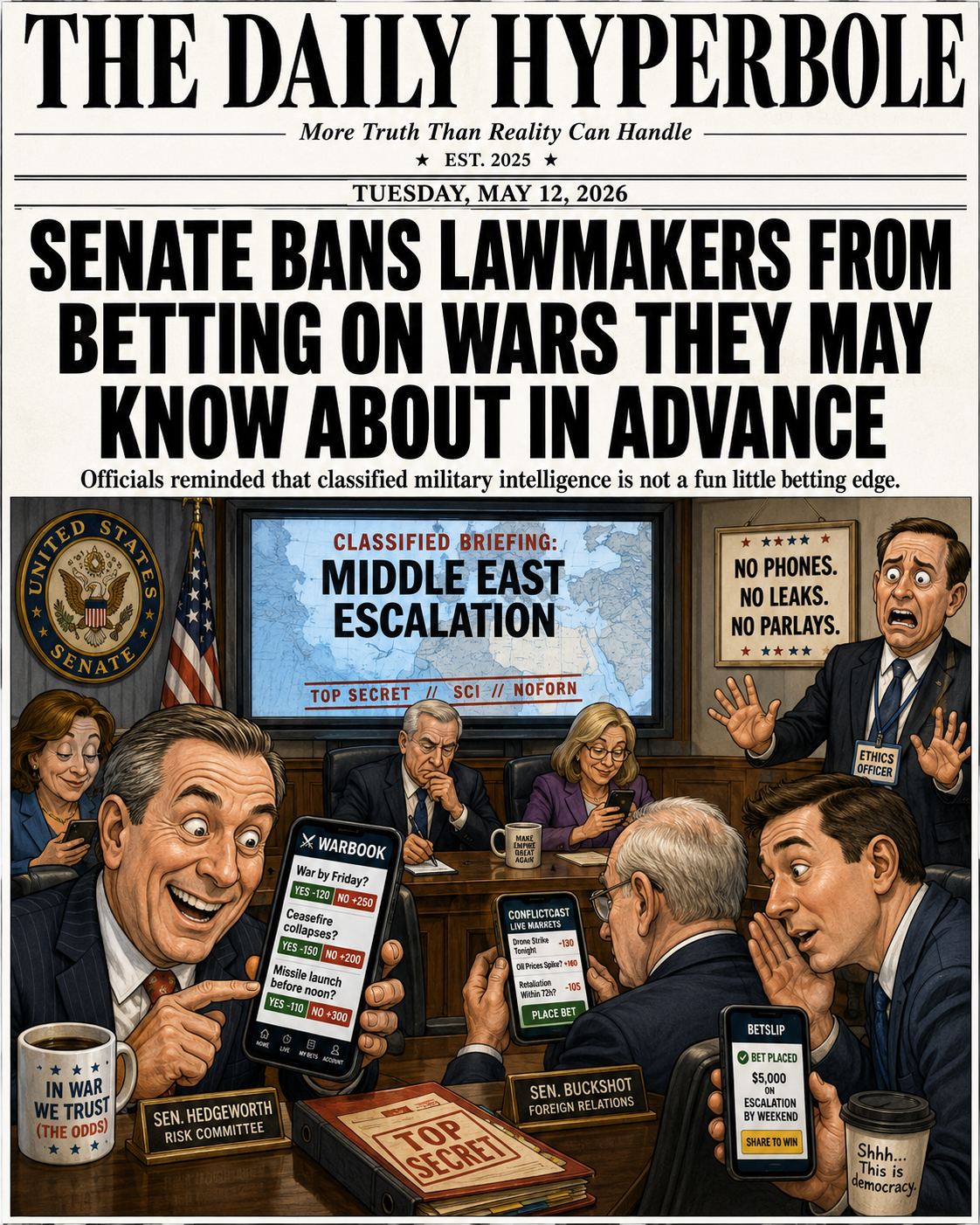
The measure comes amid growing concern that public officials could use privileged government information to make money online, a practice experts have described as “insider trading, but with more missiles.”
“Members of Congress should not be profiting from sensitive geopolitical developments before the American people have even had time to panic about them,” said one senator, adding that lawmakers remain free to make uninformed bets like everyone else.
Under the new rules, senators may no longer wager on questions such as “Will the United States bomb Iran by Friday?”, “Will a ceasefire collapse before lunch?”, or “Will this emergency briefing become public knowledge within 72 hours?”
The Senate emphasized that the ban is not an admission that lawmakers were doing anything wrong, only that several of the betting markets had begun looking disturbingly well-informed.
“We noticed certain contracts were moving with remarkable confidence moments after closed-door intelligence meetings,” said one ethics official. “That could mean nothing. It could also mean someone heard ‘Operation begins at dawn’ and immediately opened an app.”
Prediction market companies defended their platforms, arguing that they simply allow users to aggregate public sentiment, private intuition, and, in rare cases, suspiciously precise knowledge of troop movements.
Capitol Hill insiders say the ban has already caused frustration among lawmakers who had come to view prediction markets as a fun bipartisan hobby.
“It’s not gambling,” said one anonymous congressional aide. “It’s civic engagement with a payout structure.”
The House is reportedly considering a similar measure, though several representatives have asked whether the rule would apply retroactively to bets they placed on legislation they personally intended to obstruct.
At press time, senators were said to be exploring more traditional ways to monetize government dysfunction, including book deals, consulting contracts, and cable news appearances.